



Barbados is often spoken of as though its identity were shaped only by its sunlit beaches and limestone cliffs, but the truth runs deeper and far wider. The island’s story begins inside a Caribbean narrative that reshaped the entire world — a region that served as the epicentre of the transatlantic slave trade, where over six million Africans were forced across the ocean and scattered onto tiny islands that should never have borne such weight. It was a movement fifteen times larger than the number taken to what is now the United States, and its scale left deep marks on every society it touched.
No Two Islands are the Same
Yet even in a region forged in trauma, no two islands share the same story. The Caribbean is too often flattened into a single tale, as if Jamaica were Barbados, or St. Lucia were Trinidad. But these islands were never the same. Each emerged from different colonial systems, different Indigenous foundations, different terrains, crops, and cultural continuities. Barbados — coral-built, densely cultivated, and among the earliest plantation economies — developed its own character, its own struggles, and its own way of surviving and remaking itself.
And then something remarkable happened. After slavery ended and Britain loosened its hold, Barbados embraced one of the most powerful tools any society can claim: education for all. The island introduced free compulsory schooling, free school meals, and the belief that every child — regardless of class, colour, or village — deserved the same chance to learn. Within a single generation, Barbados became one of the most literate societies in the world. Classrooms opened the door to upward mobility, sharpened public debate, strengthened families, and created a society grounded in knowledge, confidence, and cultural pride.
Barbados Education Stands Apart
This literate foundation did more than uplift individuals. It reshaped the national character. Bajans grew up understanding their history, challenging ideas, mastering trades, and moving across the world with a quiet assurance shaped by education and the shared memory of hardship overcome. The island’s progress — from plantation outpost to a stable, democratic nation — owes as much to its investment in minds as to any policy or politician.
Only with this wider arc in view — the Caribbean’s vast upheaval, Barbados’ unique role within it, and the transformative power of universal education — can we fully appreciate the people who shaped this nation.
People Make the Difference
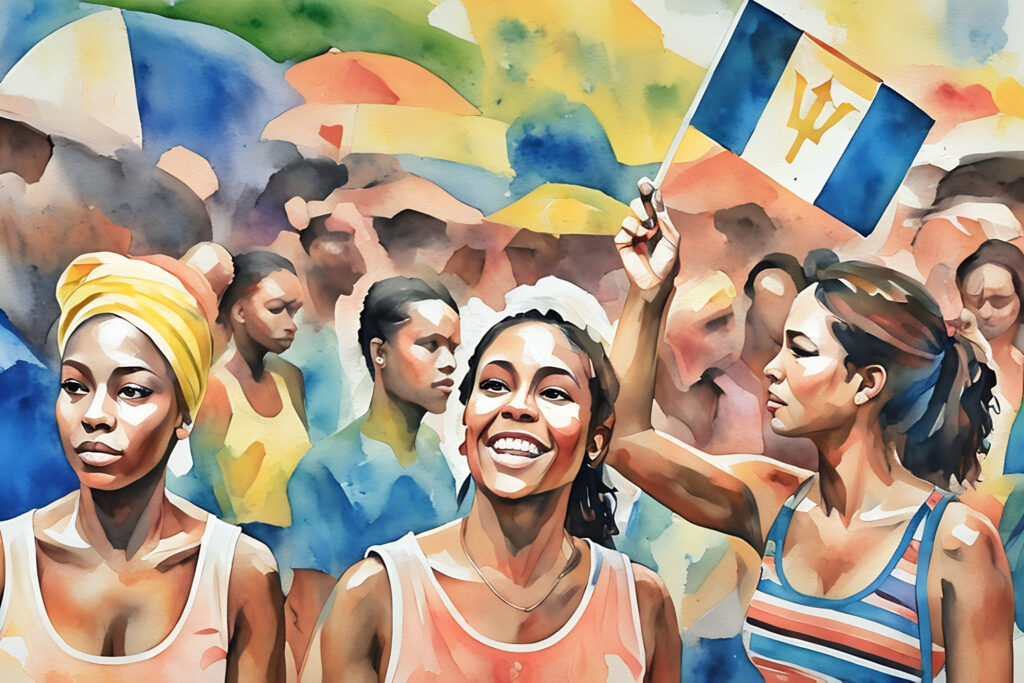
You cannot separate the island’s story from its people’s story. Every field cut into the cane belt, every chattel house lifted and shifted, every song carried on the wind, every bearded fig tree that gave Barbados its name — all of it holds the imprint of lives that built a nation long before that nation ever had a name.
Barbados became Barbados because of the people who lived on it, struggled over it, laboured across it, and fought to imagine something new from the ruins of what came before. The natural world shaped the possibilities, yes. But it was people who shaped the culture. People who forged the character. People who defined what this place would become.
Early Days of Plantations and Slavery
The earliest settlements formed small communities along the coasts, carving out lives from fertile but demanding land. Later, the island was drawn into the Atlantic world, a force that would rewrite its destiny. Sugar plantations spread across the countryside, reshaping the land as dramatically as the society. Mills turned above the trees. Ships arrived with people who had no choice in the matter — the enslaved, whose labour built an economy that enriched distant nations while costing them everything.
Yet even within the brutality of that system, a cultural resilience took root. Families stitched themselves back together in ways that defied the plantation’s logic. Villages formed. Traditions grew. Freedoms were reclaimed in small, unrecorded acts of defiance that carried the weight of rebellion without the need for spectacle.
Out of this resilience emerged a uniquely Barbadian architecture — the chattel house. Small, adaptable, and moveable, it became a symbol of survival and reinvention. Built on land that did not always belong to its occupants, it offered mobility and autonomy: a home that could follow its people, rather than forcing them to abandon their homes. It became a cultural emblem — a reminder that Barbadians were not defined by the forces that tried to hold them in place.
Imprint of Culture and Identity Persist
Modern Barbados still carries this imprint of movement and reinvention. Much of the island’s social structure, its artistic expressions, and its rhythms reflect people who refused to be broken by history. You see it in the humour that softens hardship. In the civility that anchors social life. In the self-assurance that comes from knowing where you stand and who you are. In the insistence on dignity, even when dignity was once the very thing denied.
You see it in the festivals that spill into the roads each summer, in the food shared across neighbourhoods, in the way communities rally when someone needs support. You see it in the elders who remember the old days, and in the young people imagining a Barbados yet to come.
One of the clearest windows into this legacy is the humble Barbadian chattel house — a movable wooden home that symbolised freedom, resilience, and the right to build a life on one’s own terms. If you haven’t explored this part of our story, you can read more here: Discover Barbados’ Chattel House History.
see https://barbados.org/blog/barbados-shines-bright-ranked-2-friendliest-country-in-the-world/
It is no accident that Barbados is recognised as one of theFriendliest Countries in the World, a reflection of the warmth, kindness, and natural openness that have become hallmarks of its people.
Every nation is built by its people. But in Barbados, this truth resonates deeply because so much of the island’s journey has been about reclaiming that agency. The land offers beauty. The sea offers trade. But it is people who give the island meaning.
This feature is part of a broader conversation on history and identity explored in the RoguesCulture podcast. If you’d like to experience the full seven-minute historic lesson, you can watch it now — and, if you wish, join the private pre-screening of the story that inspired it all.
At its heart, Barbados remains what it has always been: a nation built not by land or empire, but by the people who shaped it — and continue to shape it still.
More>> RoguesCulture Identity series
RoguesinParadise – The Book Https://RoguesInParadise.com
Pre-Screening of the Book-Available at https://sample.roguesinparadise.com
RoguesCulture series on culture and identity https://roguesinparadise.com/historiclessons
Video
Related Reading
– Rogues in Paradise: A cultural journey through Barbados and its people
– Caribbean History Lessons: Identity & Memory — RoguesCulture Podcast
– What It Means to Be Bajan — Identity Series, Part I
– Barbados: Yesterday, Today, and the Road to Republic
Find your ideal Barbados accommodation...
