



Crabs of Barbados: The Island's Scuttling Survivors

When most people think of Barbados wildlife, sea turtles, green monkeys, and tropical birds usually come to mind first. Crabs rarely get the spotlight, yet they're some of the most visible and fascinating animals on the island.
Whether you're walking along a beach at sunset, exploring a mangrove wetland, or driving a rural road after heavy rain, you may very well cross paths with a crab.
More Than Just Beach Dwellers
Many visitors are surprised to learn that not all island crabs live in the sea. Barbados is home to species that occupy a variety of habitats, from sandy beaches and rocky shorelines to gullies, wetlands, and even inland areas.
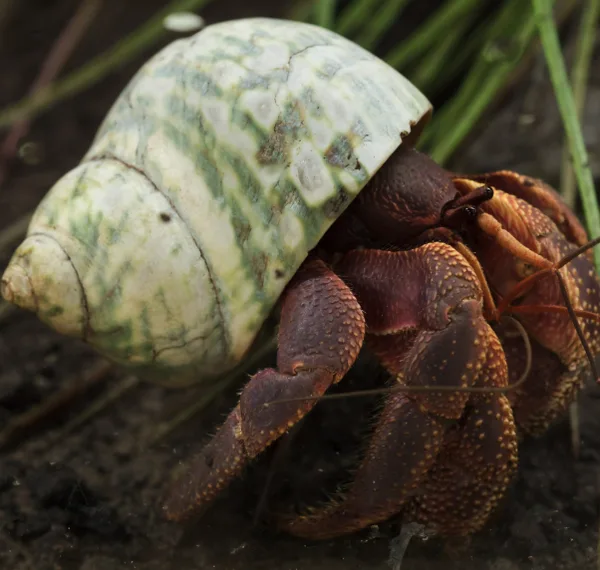
Some spend most of their lives on land, only returning to the water to reproduce. Others are closely tied to coastal environments, feeding on organic matter and helping keep ecosystems healthy.
The Ghosts of the Beach
One of the most commonly encountered crabs in Barbados is the ghost crab.
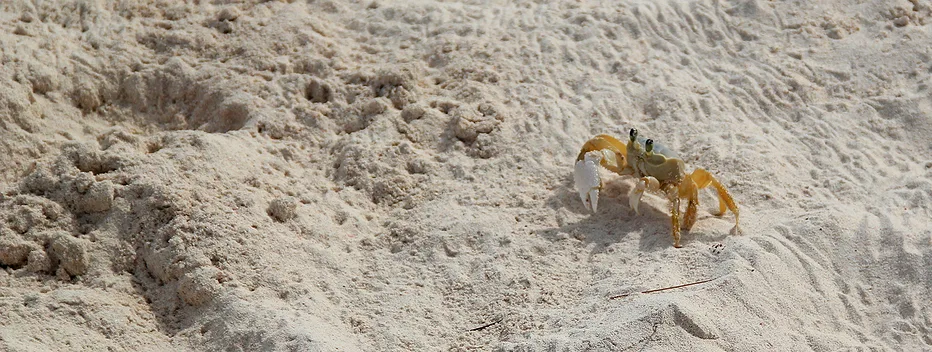
These pale-colored crabs are perfectly adapted to life on sandy beaches. During the day they remain hidden in deep burrows, emerging in the cooler hours of the evening to forage along the shoreline.
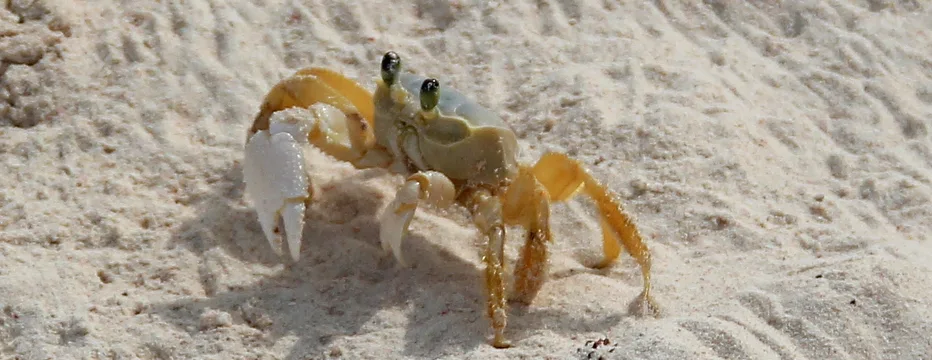
They're surprisingly quick, capable of darting across the sand at remarkable speed. If you've ever noticed small holes peppering a beach and wondered what made them, ghost crabs are usually the answer.
Land Crabs and Rainy-Day Migrations
After periods of rain, land crabs often become much more active. At certain times of the year, they may travel significant distances in search of breeding sites, sometimes turning quiet roads into unexpected crossing points.
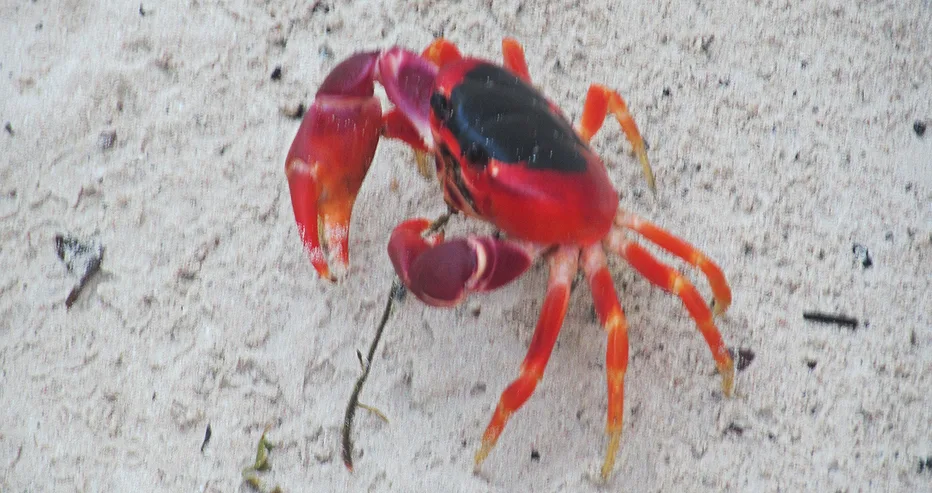
These movements are a reminder that the island's wildlife is not confined to forests and coastlines. Even seemingly ordinary areas can play an important role in the life cycle of local species.
Life in the Mangroves
Mangrove ecosystems support a variety of crabs that spend their days feeding among roots, mudflats, and shallow coastal waters.
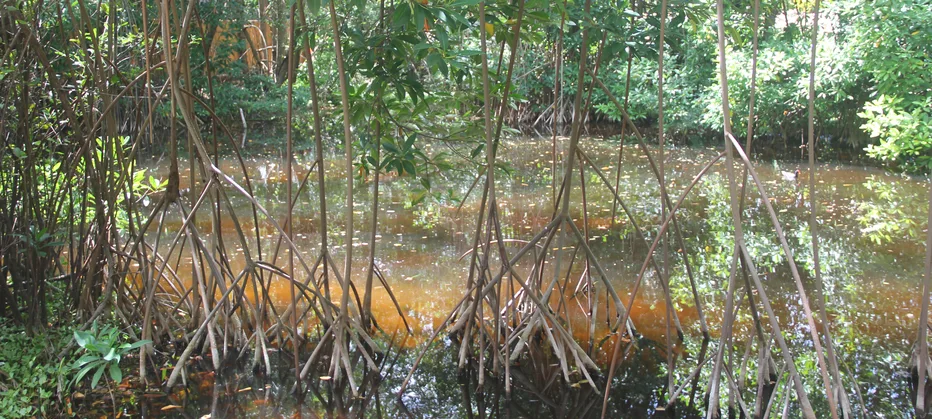
These crabs help recycle nutrients by breaking down plant material and organic debris. In doing so, they contribute to the health of one of Barbados' most important natural habitats.
Although often overlooked, they are an essential part of the intricate web of life found within the island's wetlands.
Crabs That Call Barbados Home
| Common Name(s) | Category | Primary Habitat & Characteristics |
|---|---|---|
| Atlantic Ghost Crab | Shoreline | Pale sand-colored body, large black eyestalks, fast runners in sandy beach burrows[cite: 2]. |
| Black / Red Land Crab (Zombie Crab) | Land | Dark black carapace with bright red legs and claws; inhabits coastal forests and swamps. |
| Blackback / Black-away Land Crab | Land | Small land crab with reddish body and dark central patch, common along coastal woodland trails. |
| Great Land Crab ("Swampee") | Land | Large crab with cream-to-bluish-grey shell; digs deep burrows near coastal wetlands and vegetation. |
| Caribbean Hermit Crab ("Soldier Crab") | Land | Terrestrial hermit crab using empty mollusk shells; migrates in groups down to the sea. |
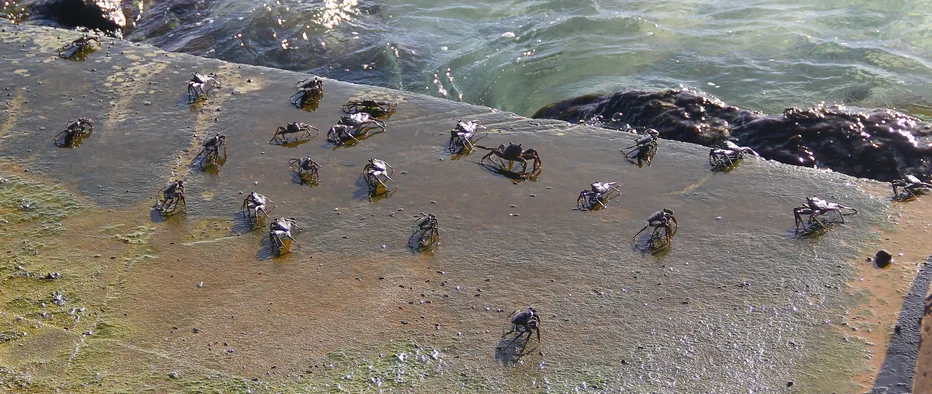
| Sally Lightfoot / Scuttle | Intertidal | Mottled dark brown to black (juveniles) or reddish-orange flat body; extremely agile on damp rocks and boardwalks. |
| Blue Crab | Intertidal / Marine | Swimming crab with paddle-like rear legs, found in shallow bays and seagrass beds. |
| Batwing Coral Crab | Reef / Marine | Large, heavy brick-red crab with scarlet spots and yellowish swirls; hides in reef ledges. |
| Caribbean King Crab | Reef / Marine | Largest true crab in the Caribbean; spiny reddish-brown body with massive claws under overhangs. |
| Yellowline Arrow Crab | Reef / Marine | Pointed triangular head and long, thin spider-like legs; associates with anemones and sponges. |
| Marine Hermit Crabs (e.g., Stareye Hermit) | Reef / Marine | Fully aquatic hermit crabs inhabiting shells across coral reefs and sandy ocean floors. |
Nature's Cleanup Crew
Crabs are nature's recyclers. Many species feed on dead plants, algae, and other organic matter that accumulates along shorelines and wetlands.
Their constant scavenging helps keep these environments functioning efficiently and supports countless other organisms. Without them, coastal ecosystems would look very different.
Small Creatures, Important Role
Crabs may not receive the attention given to some of Barbados' more famous wildlife, but they are an important part of the island's natural heritage.
From ghost crabs racing across moonlit beaches to land crabs emerging after tropical showers, these resilient crustaceans have adapted to life in nearly every coastal corner of Barbados.
The next time you spot a crab scuttling across the sand, take a moment to watch. You might discover there's much more going on beneath the surface than you first imagined.
